home

Genentech scientist brings cutting-edge AI course to SFSU

New class introduces students to protein modeling and deep learning for biotech research

After hearing the positive things colleagues had to say about San Francisco State University’s Promoting Inclusivity in Computing (PINC) program, Genentech scientist Will Thrift reached out to PINC Director Anagha Kulkarni with a proposal: collaborate on a course focused on protein artificial intelligence (AI). The result is “CSC 511: Protein Modeling with Deep Learning,” now giving SFSU undergraduates the opportunity to learn from a working Genentech scientist. 

Taught by Thrift, the class launched in the spring of 2026. Undergraduates learn the fundamentals of deep machine learning (an AI approach that trains computer models to recognize patterns in complex data) as it applies to protein systems, protein property predictions, protein folding, generative and discriminative models, and more. Since many diseases originate from proteins misbehaving, AI can help predict how a protein may malfunction and support drug discovery.

“Protein modeling with deep learning is as cutting edge as it gets. And we get to have an industry practitioner — someone who knows the theory and practices the science — craft and lead the development of the course,” said Kulkarni. As a Computer Science professor and associate chair, she’s an expert in machine learning. But protein AI isn’t her area of expertise.

“My reaction to CSC 511 was excitement,” said Psychology senior Akemi Smart. “I felt proud that I was taking it. The school wanted me to succeed, and that’s a theme I felt throughout the PINC program.” 

CSC 511 completes the sequence of classes required for the PINC minor and Data Science and Machine Learning for Biotechnology certificate. The PINC umbrella — programs and classes designed to make coding accessible for life science undergraduates — also includes a summer program, a scholarship, professional development opportunities, peer mentors in every PINC class and a comparable data certificate for professionals.

Although CSC 511 students can add skills like PyTorch (a popular platform for building AI models) and protein modeling to their resume, Thrift wanted students to walk away with more.

“Students are learning a mindset rather than a particular set of skills in the class. Especially in deep learning, things are moving so quickly that the specific things you learn in class are probably not what you’ll do day to day,” Thrift explained. “My goal with the class is to give students the mindset to not be fearful of topics and to really engage with them.”

CSC 511 just launched but it has already had a ripple effect on the PINC program. Although machine learning has been a part of PINC since the beginning, Kulkarni says CSC 511 underscores how the evolution of machine learning and AI can outpace standard university curriculum development. 

“The role us educators play now is slightly different. We must give our students skills that are immediately usable,” Kulkarni said, explaining that PINC faculty will update other classes to better match CSC 511. “These kinds of partnerships really help us make that transition. I feel this needs to happen more and more.”
Read more via SFSU news...

[Event Recap] AI and the Environment: Separating Myth from Measurable Impact | April 29

Artificial intelligence and the data centers that power the technology are portrayed as a major threat to the environment—consuming vast amounts of energy, water, and accelerating climate change. A burgeoning anti-Data Center movement is spawning across the country. Here in the California State University system and at San Francisco State University, 80 percent of students, faculty, and staff cite environmental impact as a major concern about AI.

This webinar hosted Andy Masley, an independent writer and researcher, focused on AI, environmental issues, and other topics, who explored the environmental impact of AI, media headlines and emerging research. His work broadens the view of widely held assumptions highlighting where concerns are well-founded and identifying where the conversation may be missing important context.

Watch the full recording of the webinar below.

[Event Recap] SFSU Student AI Awards Ceremony | May 5


The 2026 SFSU Student AI Awards celebrate original student projects that thoughtfully explore, apply, critique or innovate with AI.

An awards ceremony was held on Tuesday, May 5th to congratulate the winning teams and celebrate student work and achievement.

Student AI Awards - 2026 Highlights

Congratulations to the winning teams!

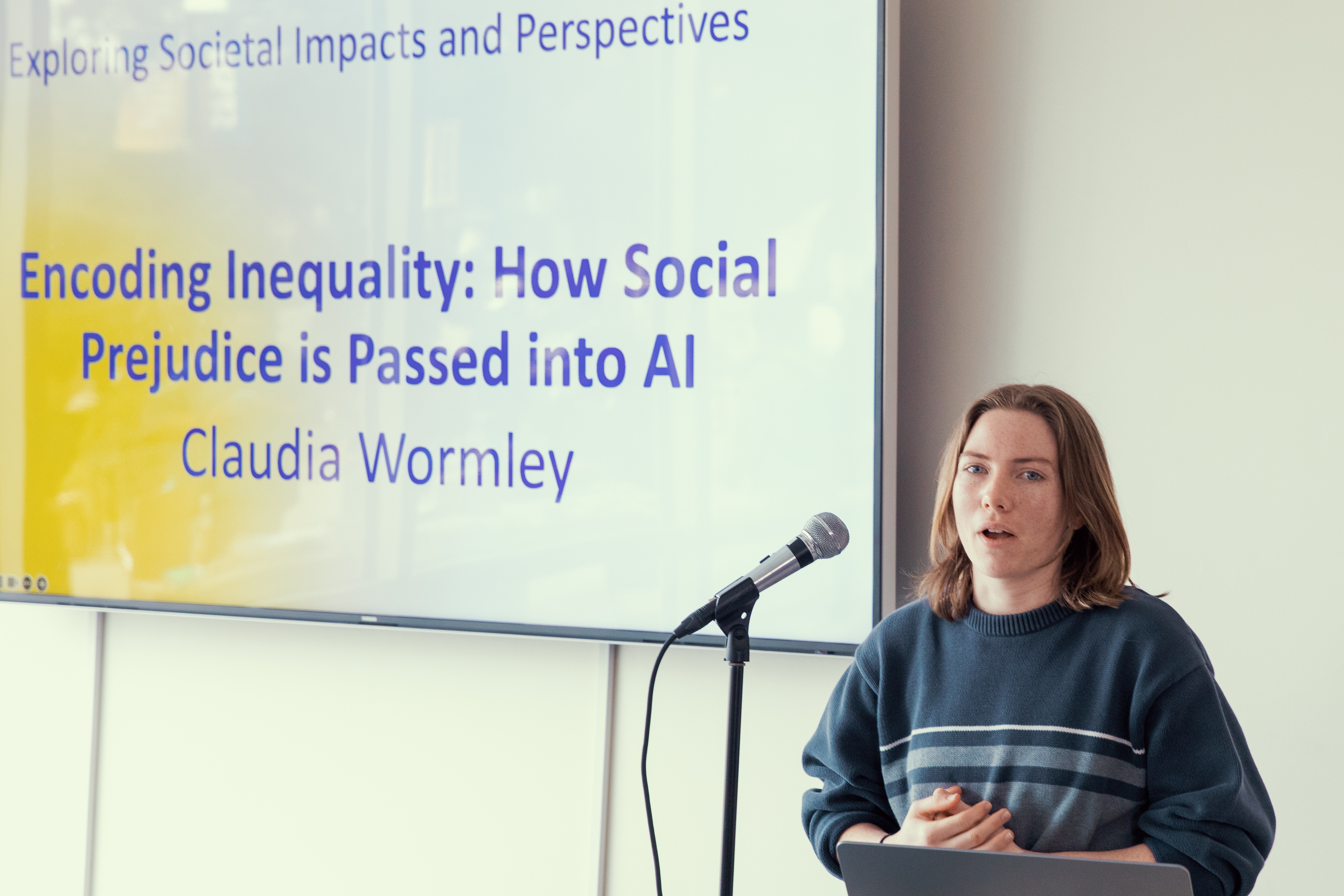
Encoding Inequality: How Social Prejudice is Passed into AI

Claudia Wormley

Category: Exploring Societal Impacts and Perspectives

Claudia Wormley presenting at the SFSU Student AI Awards 2026

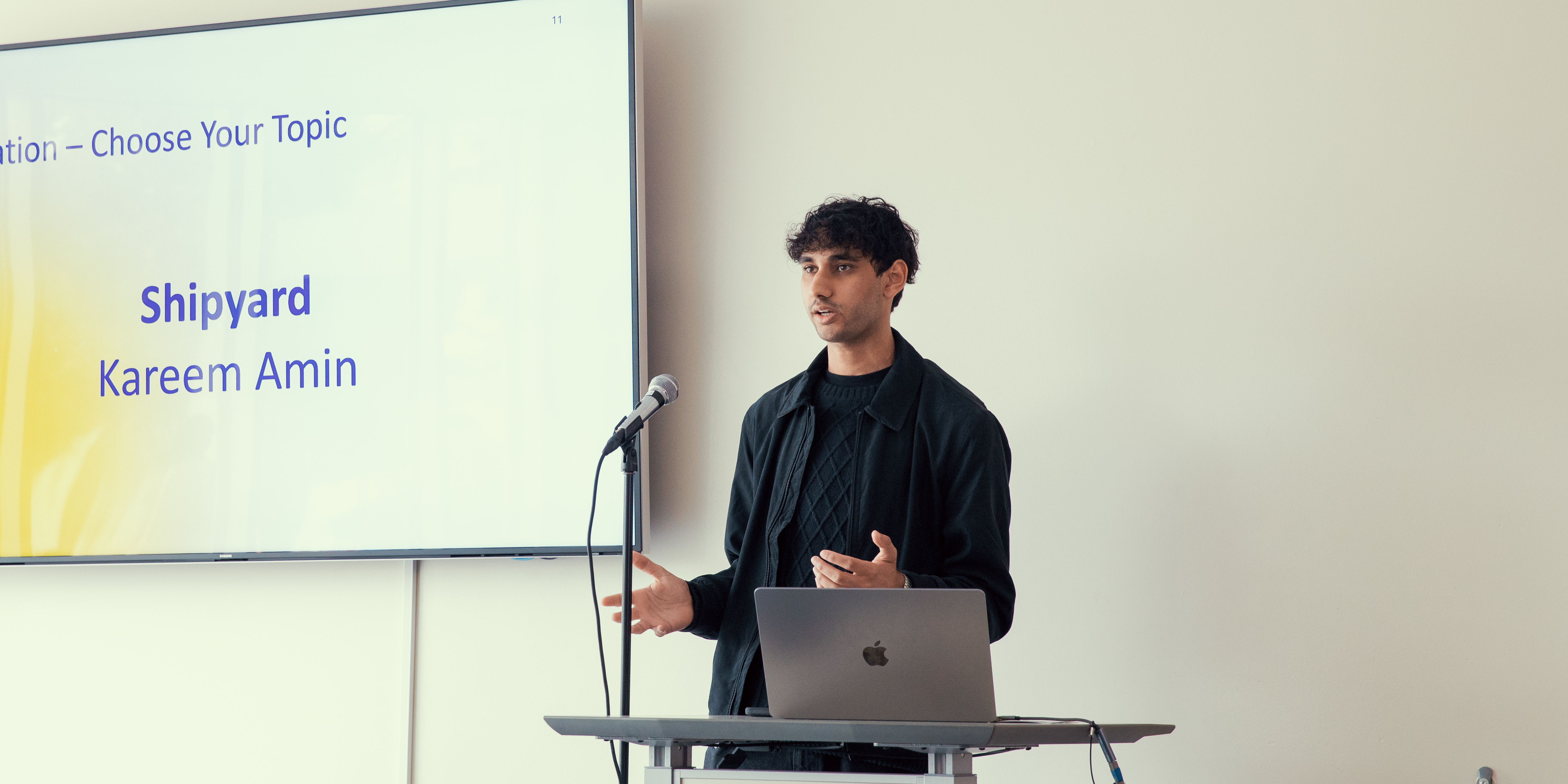
Shipyard

Kareem Amin

Category: Innovation

Kareem Amin presenting at the SFSU Student AI Awards 2026

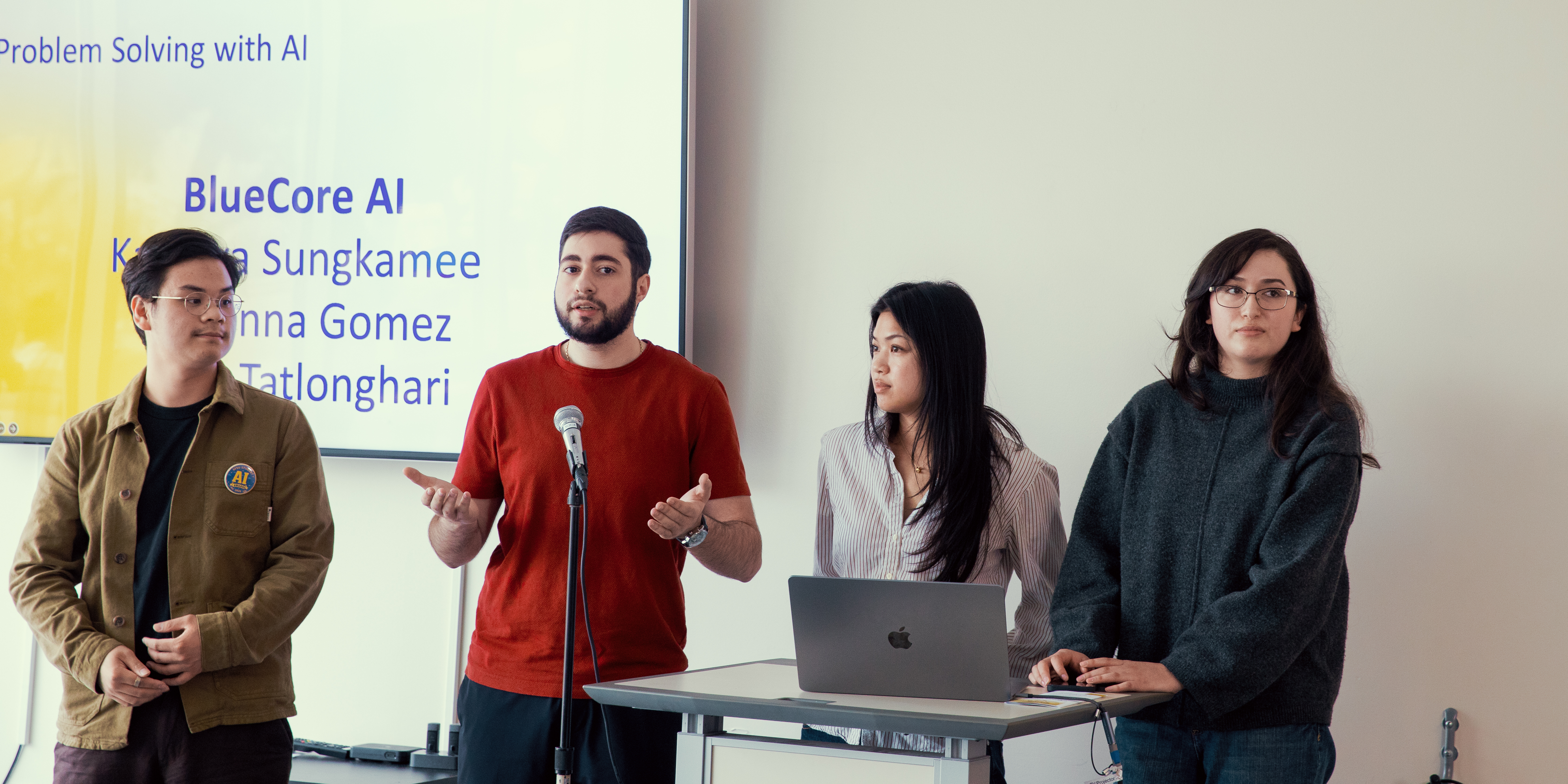
BlueCore AI

Kataliya Sungkamee, Giovanna Gomez, John Tatlonghari, Arman Daghbashyan

Category: Problem Solving with AI

BlueCore AI Team presenting at the SFSU Student AI Awards 2026

View the full ceremony

AI Literacy Education Program: Register now for summer 2026 intensive series

The AI Literacy Education Program equips the SFSU community with essential knowledge and skills to effectively and responsibly engage with generative artificial intelligence (AI).

Summer 2026 intensive course schedule now available! 

Earn your badge in one day, or catch up on course offerings in early summer. Two intensive days of programming: Friday, June 5th and Wednesday, June 10th, 2026. Register now to reserve your spot!

Start your AI journey and register now!

Schedule below, or on Event pages for each course offering.

Date Time Registration Link
Friday, June 5, 2026 9:30 — 10:30 a.m. Register here
Wednesday, June 10, 2026 11 a.m. — 12 p.m. Register here

Description: This course introduces generative AI to those with little or no prior experience engaging with this emerging technology. Participants obtain a foundational understanding of generative AI, its associated opportunities and implications, and basic strategies for composing and iterating prompts. Participants will engage in hands-on interaction with AI chatbots (Microsoft Copilot or OpenAIChatGPT) to begin generating practical outputs for a variety of use cases.

This course is an elective that counts toward receiving a digital badge for the AI Literacy Education Program.   

Objectives: In this course, you will learn to:  

  • Summarize what generative AI is, how it works, and how it differs from other AI types
  • Describe accuracy and ethical considerations associated with generative AI
  • Identify task-related opportunities with generative AI
  • Apply foundational prompting strategies to produce practical outputs with generative AI chatbots

Duration: 60 minutes

Experience Level: Little or no familiarity with generative AI and/or AI chatbots

Date Time Registration Link
Friday, June 5, 2026 11 a.m. — 12 p.m. Register here
Wednesday, June 10, 2026 1 — 2 p.m. Register here

Description: This course explores the critical analysis of generative AI to support responsible use of this technology. Learn how AI models are trained and why misinformation and biases may occur in AI-generated content. Develop strategies to analyze AI outputs and assess AI tools for quality and ethical considerations. Participants will be expected to engage in the evaluation process through collaborative, hands-on activities and reflective discussions. 

This course is required to receive a digital badge for the AI Literacy Education Program.  

Objectives: In this course, you will learn to:  

  • Describe how AI models are trained on data
  • Summarize how misinformation and biases occur from training data
  • Identify types of biases that arise in AI outputs
  • Critically analyze AI outputs for accuracy and potential biases
  • Explain how to critically evaluate AI tools

Duration: 60 minutes

Experience Level: Basic familiarity with generative AI chatbots like Microsoft Copilot or ChatGPT

Date Time Registration Link
Friday, June 5, 2026 1 - 2 p.m. Register here
Wednesday, June 10, 2026 2:30 — 3:30 p.m. Register here

Description: This course explores the critical analysis of generative AI to support responsible use of this technology. Learn why misinformation and biases may occur in AI-generated content, and explore the technology’s security and environmental implications. Through collaborative activities and reflective discussions, participants will develop a critical mindset to evaluate AI outputs for quality and ethical considerations.

This course is required to receive a digital badge for the AI Literacy Education Program.  

Objectives: In this course, you will learn to:  

  • Identify ethical and security considerations related to AI 

  • Describe how misinformation and biases occur in AI content 

  • Critically evaluate AI content for accuracy and biases 

Duration: 60 minutes

Experience Level: Basic familiarity with generative AI chatbots like Microsoft Copilot or ChatGPT

Date Time Registration Link
Friday, June 5, 2026 2:30 — 3:30 p.m. Register here
Wednesday, June 10, 2026 9:30 — 10:30 a.m. Register here

Description: This course explores image creation with generative AI. Participants will gain a primer on generative AI tools for image creation, considerations for using generative AI, and best practices for creating effective and accessible images for various use cases. Through hands-on activities, participants will develop skills in crafting descriptive prompts and selecting appropriate visual styles to generate unique images with ChatGPT, Microsoft Copilot, and Adobe Firefly.

This course is an elective that counts toward receiving a digital badge for the AI Literacy Education Program.

*Disclaimers

  • This course utilizes Adobe tools which are available to all faculty, staff and students.
  • Adobe Firefly and Express are accessed via the web. Participants do NOT need to download Adobe Creative Cloud.

Objectives: In this course, you will learn to:  

  • Understand the basics of generative AI technology for image creation
  • Write descriptive prompts and use visual style options to generate images
  • Employ best practices for creating effective and accessible images

Duration: 60 minutes

Experience Level: Little or no familiarity with generative AI tools for image creation

AI Summer Camp - CSU Student Application Deadline Extended | May 1

The application deadline for CSU students to apply for the AI Summer Camp has been extended to May 1, 2026.

The event, hosted by AWS and Cal Poly SLO, is open to all CSU students. Selected students will participate in a fully funded in-person, one-week experience focused on building AI solutions.

The AI Summer Camp will be held at Cal Poly SLO July 12 - 17, 2026.

Students can apply here: https://dxhub.calpoly.edu/call-for-applicants-csu-ai-summer-camp-2026/ 

AI Literacy Education Program: Spring 2026 courses now available

The AI Literacy Education Program equips the SFSU community with essential knowledge and skills to effectively and responsibly engage with generative artificial intelligence (AI).

 Join us this Spring to engage in guided inquiry of this emerging technology, catch up on your digital badging progress, or level up your understanding of generative AI.

Start your AI journey and register now!

Schedule below, or on Event pages for each course offering.

Date Time Registration Link
Thursday, February 5, 2026 11 a.m. - 12 p.m. Register here
Tuesday, March 17, 2026 2 - 3 p.m. Register here

Description: This course introduces generative AI to those with little or no prior experience engaging with this emerging technology. Participants obtain a foundational understanding of generative AI, its associated opportunities and implications, and basic strategies for composing and iterating prompts. Participants will engage in hands-on interaction with AI chatbots (Microsoft Copilot or OpenAIChatGPT) to begin generating practical outputs for a variety of use cases.

This course is an elective that counts toward receiving a digital badge for the AI Literacy Education Program.   

Objectives: In this course, you will learn to:  

  • Summarize what generative AI is, how it works, and how it differs from other AI types
  • Describe accuracy and ethical considerations associated with generative AI
  • Identify task-related opportunities with generative AI
  • Apply foundational prompting strategies to produce practical outputs with generative AI chatbots

Duration: 60 minutes

Experience Level: Little or no familiarity with generative AI and/or AI chatbots

Date Time Registration Link
Friday, February 13, 2026 2 - 3 p.m. Register here
Wednesday, March 4, 2026 11 a.m. - 12 p.m. Register here
Thursday, April 2, 2026 11 a.m. - 12 p.m. Register here

Description: This course explores the critical analysis of generative AI to support responsible use of this technology. Learn how AI models are trained and why misinformation and biases may occur in AI-generated content. Develop strategies to analyze AI outputs and assess AI tools for quality and ethical considerations. Participants will be expected to engage in the evaluation process through collaborative, hands-on activities and reflective discussions. 

This course is required to receive a digital badge for the AI Literacy Education Program.  

Objectives: In this course, you will learn to:  

  • Describe how AI models are trained on data
  • Summarize how misinformation and biases occur from training data
  • Identify types of biases that arise in AI outputs
  • Critically analyze AI outputs for accuracy and potential biases
  • Explain how to critically evaluate AI tools

Duration: 60 minutes

Experience Level: Basic familiarity with generative AI chatbots like Microsoft Copilot or ChatGPT

Date Time Registration Link
Tuesday, February 17, 2026 1 - 2 p.m. Register here
Monday, March 9, 2026 11 a.m. - 12 p.m. Register here
Wednesday, April 8, 2026 2 - 3 p.m. Register here

Description: This course explores the critical analysis of generative AI to support responsible use of this technology. Learn why misinformation and biases may occur in AI-generated content, and explore the technology’s security and environmental implications. Through collaborative activities and reflective discussions, participants will develop a critical mindset to evaluate AI outputs for quality and ethical considerations.

This course is required to receive a digital badge for the AI Literacy Education Program.  

Objectives: In this course, you will learn to:  

  • Identify ethical and security considerations related to AI 

  • Describe how misinformation and biases occur in AI content 

  • Critically evaluate AI content for accuracy and biases 

Duration: 60 minutes

Experience Level: Basic familiarity with generative AI chatbots like Microsoft Copilot or ChatGPT

Date Time Registration Link
Wednesday, February 25, 2026 11 a.m. - 12:00 p.m. Register here

Description: This course explores image creation with generative AI. Participants will gain a primer on generative AI tools for image creation, considerations for using generative AI, and best practices for creating effective and accessible images for various use cases. Through hands-on activities, participants will develop skills in crafting descriptive prompts and selecting appropriate visual styles to generate unique images with ChatGPT, Microsoft Copilot, and Adobe Firefly.

This course is an elective that counts toward receiving a digital badge for the AI Literacy Education Program.

*Disclaimers

  • This course utilizes Adobe tools which are available to faculty, staff, and select student populations. Students will need to ensure they have access to Adobe apps before attending this workshop.
  • Adobe Firefly and Express are accessed via the web. Participants do NOT need to download Adobe Creative Cloud.

Objectives: In this course, you will learn to:  

  • Understand the basics of generative AI technology for image creation
  • Write descriptive prompts and use visual style options to generate images
  • Employ best practices for creating effective and accessible images

Duration: 60 minutes

Experience Level: Little or no familiarity with generative AI tools for image creation

CSU AI Survey for Students, Faculty and Staff

Starting Monday, September 22 through Monday, October 6, 2025, SFSU students, faculty and staff are invited to provide their input on how the Artificial Intelligence (AI) technologies are shaping our campus community.

The AI Survey is a CSU-wide effort to assess campus perspectives on generative AI. The survey will provide a snapshot of the SFSU community’s GenAI-related needs and desires, supporting a locally responsive campus approach to this potentially game-changing technology. Whether you use AI tools in your classes, office, research or laboratory or not, we welcome your thoughts. By sharing your opinions, you’ll help strengthen our campus community. 

The survey is completely anonymous and will help guide SFSU in creating a thoughtful and responsive approach to generative AI. Those who choose to share their information will be eligible for a CSU-wide prize drawing. Your participation is critical to ensuring the ethical and effective adoption of AI at SFSU and across the CSU system.

SFSU now an Adobe Creative Campus, expanding access for Students and Employees

The California State University (CSU) system has officially launched a groundbreaking systemwide initiative that significantly expands access to Adobe tools throughout CSU community.

Under the new agreement with Adobe, CSU students and employees now have unlimited access to Adobe Creative Cloud and Adobe Express, empowering them with industry-standard tools for creative work, academic projects, and professional development.

In addition, faculty and staff are now licensed for the Adobe Acrobat AI Assistant, an intelligent productivity tool designed to enhance document workflows, automate routine tasks, and improve efficiency through artificial intelligence.

As a result of this expanded partnership, CSU becomes the first-ever Adobe Creative Campus system, marking a historic milestone in public higher education and reinforcing CSU’s leadership in digital equity and innovation.

Key benefits of Adobe Creative Campus inclusion:

  • Unlimited Adobe Creative Cloud and Adobe Express access for CSU students and employees
  • Acrobat AI Assistant licenses provided for CSU faculty and staff (64,259 total)
  • CSU recognized as the first-ever Adobe Creative Campus system


To learn more about Adobe tools and AI features, visit the AI Tools page.
 

AI Literacy Education Program: Fall 2025 courses now available

The AI Literacy Education Program equips the SFSU community with essential knowledge and skills to effectively and responsibly engage with generative artificial intelligence (AI).

 Join us this Fall to engage in guided inquiry of this emerging technology, catch up on your digital badging progress, or level up your understanding of generative AI.

Start your AI journey and register now!

Schedule below, or on Event pages for each course offering.

Date Time Registration Link
Wednesday, September 3, 2025 10:30 a.m. - 12:00 p.m. Register here
Wednesday, September 24, 2025 2:00 p.m. - 3:30 p.m. Register here
Wednesday, October 15, 2025 10:30 a.m. - 12:00 p.m. Register here
Thursday, October 30, 2025 2:00 p.m. - 3:30 p.m. Register here
Wednesday, December 3, 2025 10:30 a.m. - 12:00 p.m. Register here

Description: This course introduces generative AI to those with little or no prior experience engaging with this emerging technology. Participants obtain a foundational understanding of generative AI, its associated opportunities and implications, and basic strategies for composing and iterating prompts. Participants will be expected to engage in hands-on interaction with the Microsoft Copilot chatbot to begin generating practical outputs for personal and professional use cases. 

This course is an elective that counts toward receiving a digital badge for the AI Literacy Education Program.   

Objectives: In this course, you will learn to:  

  • Summarize what generative AI is, how it works, and how it differs from other AI types
  • Describe accuracy and ethical considerations associated with generative AI
  • Identify task-related opportunities with generative AI
  • Apply foundational prompting strategies to produce practical outputs with generative AI chatbots

Duration: 90 minutes

Experience Level: Little or no familiarity with generative AI and/or AI chatbots

Date Time Registration Link
Thursday, September 4, 2025 2:00 p.m. - 3:30 p.m. Register here
Thursday, September 25, 2025 10:30 a.m. - 12:00 p.m. Register here
Thursday, October 16, 2025 2:00 - 3:30 p.m. Register here
Monday, November 3, 2025 2:00 - 3:30 p.m. Register here
Thursday, December 4, 2025 2:00 - 3:30 p.m. Register here

Description: This course offers a focused exploration of prompting and iteration strategies for generative AI chatbots like Microsoft Copilot. Through collaborative, hands-on activities and interactive exercises, participants will learn to write clear, effective prompts, apply refinement techniques such as prompt chaining, and assess AI-generated outputs for accuracy and relevance to achieve more reliable and useful results in a variety of academic and non-academic contexts. 

This course is required to receive a digital badge for the AI Literacy Education Program.

Objectives: In this course, you will learn to: 

  • Write effective prompts to get accurate and useful results from AI tools
  • Refine and improve AI outputs using practical feedback and iteration techniques
  • Evaluate AI-generated content to determine its accuracy and relevance to your needs

Duration: 90 minutes

Experience Level: Basic familiarity with generative AI chatbots like Microsoft Copilot or ChatGPT

Date Time Registration Link
Wednesday, September 10, 2025 10:30 a.m. - 12:00 p.m. Register here
Wednesday, October 1, 2025 10:30 a.m. - 12:00 p.m. Register here
Wednesday, October 22, 2025 2:00 p.m. - 3:30 p.m. Register here
Wednesday, November 12, 2025 2:00 p.m. - 3:30 p.m. Register here

Description: This course explores the critical analysis of generative AI to support responsible use of this technology. Learn how AI models are trained and why misinformation and biases may occur in AI-generated content. Develop strategies to analyze AI outputs and assess AI tools for quality and ethical considerations. Participants will be expected to engage in the evaluation process through collaborative, hands-on activities and reflective discussions. 

This course is required to receive a digital badge for the AI Literacy Education Program.  

Objectives: In this course, you will learn to:  

  • Describe how AI models are trained on data
  • Summarize how misinformation and biases occur from training data
  • Identify types of biases that arise in AI outputs
  • Critically analyze AI outputs for accuracy and potential biases
  • Explain how to critically evaluate AI tools

Duration: 90 minutes

Experience Level: Basic familiarity with generative AI chatbots like Microsoft Copilot or ChatGPT

Date Time Registration Link
Thursday, September 11, 2025 2:00 p.m. - 3:00 p.m. Register here
Thursday, October 2, 2025 2:00 p.m. - 3:00 p.m. Register here
Thursday, October 23, 2025 10:30 a.m. - 12:00 p.m. Register here

Description: This course introduces participants to the Zoom AI Companion and its practical applications within a university setting. The course covers key features such as meeting summaries, real-time Q&A, interactive smart recordings, and whiteboard tools for generating sticky notes, tables, mind maps, and flowcharts. Participants will learn how to apply these tools to enhance productivity, collaboration, and learning in academic and administrative contexts through guided demonstrations and hands-on activities. 

This course is an elective that counts toward receiving a digital badge for the AI Literacy Education Program.  

Objectives: In this course, you will learn to: 

  • Describe the main features of Zoom AI Companion
  • Identify practical scenarios where Zoom AI Companion can enhance productivity, collaboration, or learning outcomes
  • Demonstrate how to use Zoom AI Companion features to accomplish specific tasks

Duration: 90 minutes

Experience Level: Little or no familiarity with generative AI tools

Date Time Registration Link
Wednesday, September 17, 2025 10:30 a.m. - 12:00 p.m. Register here
Wednesday, October 8, 2025 2:00 p.m. - 3:00 p.m. Register here
Wednesday, October 29, 2025 2:00 p.m. - 3:00 p.m. Register here

Description: This course explores image creation with generative AI. Participants will gain a primer on generative AI tools for image creation, considerations for using generative AI, and best practices for creating effective and accessible images for various use cases. Through hands-on activities, participants will develop skills in crafting descriptive prompts and selecting
appropriate visual styles to generate unique images with ChatGPT, Microsoft Copilot, and Adobe Firefly.

This course is an elective that counts toward receiving a digital badge for the AI Literacy Education Program.

*Disclaimers

  • This course utilizes Adobe tools which are available to faculty, staff, and select student populations. Students will need to ensure they have access to Adobe apps before attending this workshop.
  • Adobe Firefly and Express are accessed via the web. Participants do NOT need to download Adobe Creative Cloud.

Objectives: In this course, you will learn to:  

  • Understand the basics of generative AI technology for image creation
  • Write descriptive prompts and use visual style options to generate images
  • Employ best practices for creating effective and accessible images

Duration: 90 minutes

Experience Level: Little or no familiarity with generative AI tools for image creation

Date Time Registration Link
Thursday, September 18, 2025 2:00 p.m. - 3:30 p.m. Register here
Thursday, October 9, 2025 10:30 a.m. - 12:00 p.m. Register here
Monday, November 17, 2025 2:00 p.m. - 3:30 p.m. Register here

Description: This course is designed specifically for SFSU staff looking to integrate generative AI in your daily work. Learn how to prepare for effective and responsible AI use, write goal-oriented prompts to accomplish particular work tasks, evaluate AI-generated content for quality and reliability, and refine outputs to enhance efficiency and productivity in your professional context. Participants will engage in hands-on activities with Microsoft Copilot or ChatGPT Edu to employ strategies in real-world work scenarios, share practical insights and use cases with peers, and assess additional opportunities for integrating generative AI tools in specific practice areas.

This course is an elective for the digital badge for the AI Literacy Education Program, and is recommended specifically for SFSU staff

Objectives: In this course, you will learn to:  

  • Identify appropriate use cases for generative AI in individual work contexts
  • Determine what and how to prepare before engaging with generative AI tools
  • Develop effective, goal-oriented prompts to accomplish particular work tasks with
    generative AI chatbots
  • Evaluate the quality, reliability, and effectiveness of AI-generated content for
    professional use cases
  • Assess opportunities to integrate generative AI tools in particular practice areas

Duration: 90 minutes

Experience Level: Basic familiarity with generative AI chatbots like Microsoft Copilot or ChatGPT

SFSU ChatGPT Day Recap | May 7

As part of the San Francisco State University (SFSU) ChatGPT Edu rollout, Academic Technology (AT), the Center for Equity & Excellence in Teaching & Learning (CEETL), and Information Technology Services (ITS) partnered with OpenAI to host SFSU ChatGPT Day on Wednesday, May 7, 2025. Featuring user-focused sessions for active students, faculty, and staff, ChatGPT Day demonstrated what the tool has to offer the campus community.

Session recordings are listed below.

Custom GPTs for Educational Use

The segment discusses the use of custom GPTs for educational purposes, particularly in university settings. A biology lecture recall GPT is demonstrated, which allows students to ask questions about specific lectures and topics. Professors can upload lecture materials, including PowerPoint presentations and recordings, to create these custom GPTs. Students can then interact with the GPT to review lecture content, ask clarifying questions, and even generate visualizations. The discussion also covers the potential benefits of using these tools, such as enabling more elevated classroom discussions and allowing students to learn at their own pace. Concerns about academic integrity and the potential for students to misuse the tool are addressed, with suggestions for implementing AI disclosure forms and focusing on developing students' critical thinking and prompt engineering skills.

(description generated by Zoom AI Companion)

ChatGPT Edu for Academic Success

The session introduces OpenAI's ChatGPT Edu rollout at San Francisco State University. Sia and Keelan from OpenAI's Education team discuss how students can best utilize AI in their academic and professional journeys. They recommend using ChatGPT for various purposes, including career navigation, coursework assistance, and skill development. The presenters emphasize the importance of familiarizing oneself with the model through regular use and highlight the enhanced security and collaboration features of the Edu version compared to the free version. They also address questions about data privacy, differences between versions, and ongoing improvements to the model's capabilities, particularly in mathematics and reasoning.

(description generated by Zoom AI Companion)

ChatGPT for Academic Research

The discussion covers various aspects of using AI, particularly ChatGPT, in academic and research settings. Keelan from OpenAI explains that ChatGPT can be a powerful tool for brainstorming, starting research, and exploring different areas of focus. He emphasizes that the session will provide tips and tricks for using ChatGPT effectively in research contexts. The conversation also touches on the environmental impact of AI models, with OpenAI working to make their models more environmentally sustainable and cost-effective.

(description generated by Zoom AI Companion)

Introducing ChatGPT Edu at SF State

The session focuses on introducing ChatGPT Edu at SF State to faculty and staff. The presenter welcomes attendees and introduces representatives from OpenAI. Participants are guided through the process of logging into their ChatGPT accounts using their university email addresses. The session is designed as a training to help faculty and staff take advantage of ChatGPT Edu, with hands-on assistance available for those who need it.

(description generated by Zoom AI Companion)